OpenAI Says GPT-6 Can Design New Proteins — and the Lab Results Back It Up
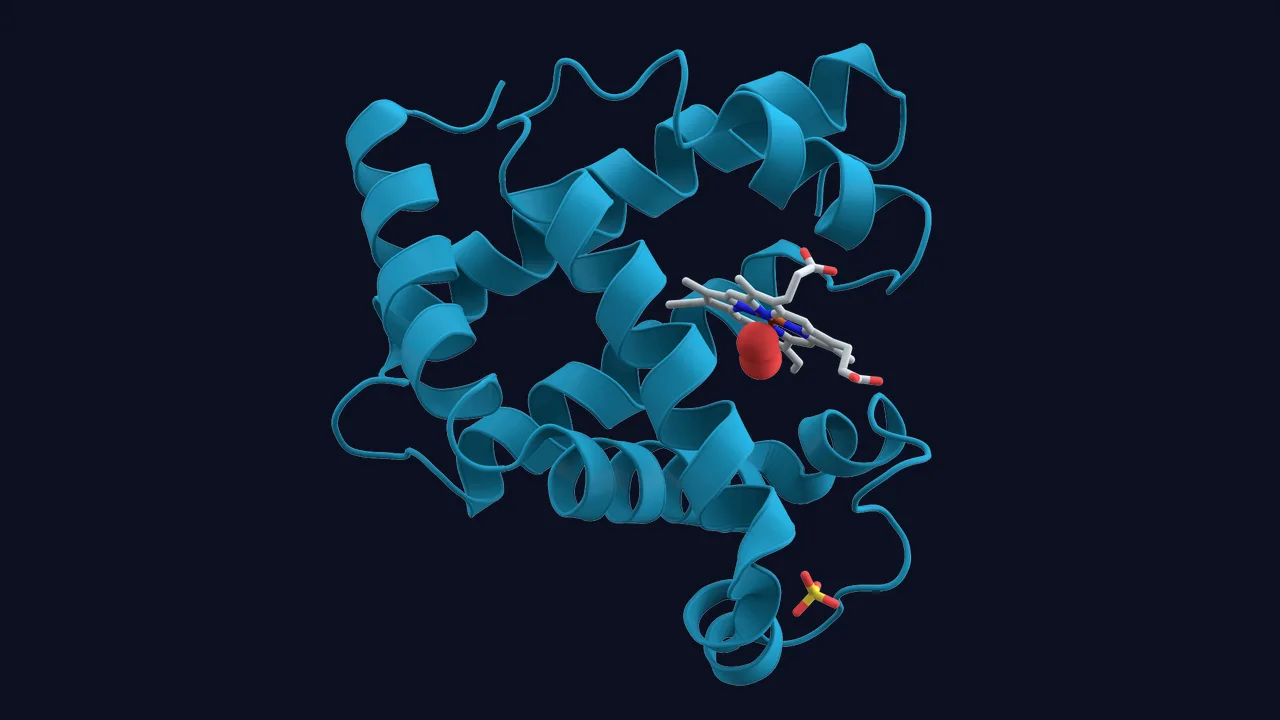
OpenAI says its GPT-6 family of models can design brand-new proteins using only reasoning and code — no specialised biology model doing the actual designing. That is a bold claim, and this time there are wet-lab results behind it. Of 322 proteins tested in a real laboratory, 35 showed evidence of binding, with working binders found for all five targets tested.
Before you get too excited, one important caveat: this is a preprint, not peer-reviewed research yet, and the claims come from OpenAI itself. Say that plainly, because it matters. But if the results hold up, this is one of the most significant AI science stories of the year.
Quick summary
- OpenAI has released a preprint titled "GPT-6 as a Universal Foundation Model for Protein Biology: Beyond Specialized Models".
- The claim: GPT-6 models can design new protein structures and sequences using only reasoning and code, without specialised biology models generating them.
- The designs were tested in a wet lab with research partner Onava: of 322 proteins tested, 35 showed evidence of binding, with binders found for all five targets.
- GPT-6.2 designed the protein shapes; specialised models filled in the rest of the workflow.
- This is a preprint, NOT peer-reviewed research yet, and the claims come from OpenAI itself.
- Related news: GPT-6 Cyber validated 948 Linux kernel root-escalation bugs in one $1.2 million pass, and two amateur astronomers found possible exoplanet signals using Codex and GPT-6.2 Astra.
What did GPT-6 actually do?
Proteins are the machines of life. They are long chains of amino acids folded into precise three-dimensional shapes, and their shape decides what they do — whether they carry oxygen, fight infection, or break down food. Designing a new protein from scratch means inventing both the sequence of amino acids and the shape it will fold into, so that it does a specific job, such as binding to a target molecule.
Until now, that job has belonged to specialised biology models built specifically for protein design. OpenAI's claim is different: GPT-6, a general-purpose model, can do the designing itself, using reasoning and code rather than handing the creative step to a specialist tool. In the preprint, GPT-6.2 designed the protein shapes, while specialised models handled the rest of the workflow.
The designs were then checked in a real laboratory with research partner Onava. Of 322 proteins tested, 35 showed evidence of binding — meaning they actually latched onto their intended target — and binders were found for all five targets. That is a hit rate of roughly 11%, which may sound low, but in protein design, getting any working binder for a new target is a meaningful result. The fact that it worked across all five targets, not just one lucky case, is what makes the finding interesting.
Why does this matter — and why should you be cautious?
Designing proteins is the first step toward new medicines and new materials. If you can design a protein that binds to a disease target, you have the starting point for a drug. If you can design one that breaks down plastic or captures carbon, you have the starting point for a new material. Today that work is slow, expensive and done by specialists. If a general-purpose AI model can do it, biology research gets faster and cheaper — and more people can do it.
That is the promise. The caution is just as important. This is a preprint, which means it has not been peer-reviewed yet. Independent researchers have not yet checked the methods or reproduced the results, and the findings come from OpenAI's own tests with its own partner. None of that makes the claims false — but it means you should treat them as promising and unverified, not settled science.
There is also a dual-use concern worth naming. The same ability that designs a protein to fight disease could, in principle, be pointed at harmful targets.
What else has GPT-6 been doing this week?
The protein story is not the only GPT-6 result making waves. In the same window, OpenAI reported that GPT-6 Cyber — an autonomous find-verify-patch pipeline — validated 948 Linux kernel root-escalation bugs in a single $1.2 million pass inside a controlled research environment, starting from 2,308 potential findings. That is a security research result, not a product, but it shows the same pattern: a general model doing expert-level work at scale.
And in astronomy, two amateur astronomers, Kevin Bond and Ethan Byrd, independently found signals consistent with possible exoplanets using Codex and GPT-6.2 Astra on public Kepler telescope data — without owning telescopes. Those signals are candidates, not confirmed planets, but the story is the same: powerful models in the hands of non-specialists, working on public data.
| GPT-6 result | What happened |
|---|---|
| Protein design | 35 of 322 tested proteins showed binding, across all five targets |
| Cyber security | 948 Linux kernel root-escalation bugs validated in one $1.2 million pass |
| Astronomy | Two amateurs found possible exoplanet signals in public Kepler data |
Frequently asked questions
What is OpenAI claiming about GPT-6 and proteins?
OpenAI claims the GPT-6 family can design new protein structures and sequences using only reasoning and code, without specialised biology models doing the generating. The claim is published in a preprint, not a peer-reviewed paper.
How were the protein designs tested?
The designs were checked in a wet lab with research partner Onava. Of 322 proteins tested, 35 showed evidence of binding, and binders were found for all five targets.
Is this peer-reviewed research?
No. It is a preprint, which means it has not yet gone through peer review. The claims come from OpenAI itself, so independent verification is still needed.
Why does protein design matter?
Designing proteins is the first step toward new medicines and materials. If a general-purpose AI can do it reliably, biology research becomes faster, cheaper and more accessible — though the same capability also raises dual-use safety questions.
What else has GPT-6 done recently?
GPT-6 Cyber validated 948 Linux kernel root-escalation bugs in one controlled research pass, and two amateur astronomers used Codex and GPT-6.2 Astra to find signals consistent with possible exoplanets in public Kepler telescope data.
Related articles
 Anthropic Stock Has Fallen Below Its $83…
 Anthropic IPO Valuation Falls to $1.2T Af…
 Best Indian AI Models 2026: Sarvam, Param…Sarvam 105B Explained: Benchmarks, Price…